
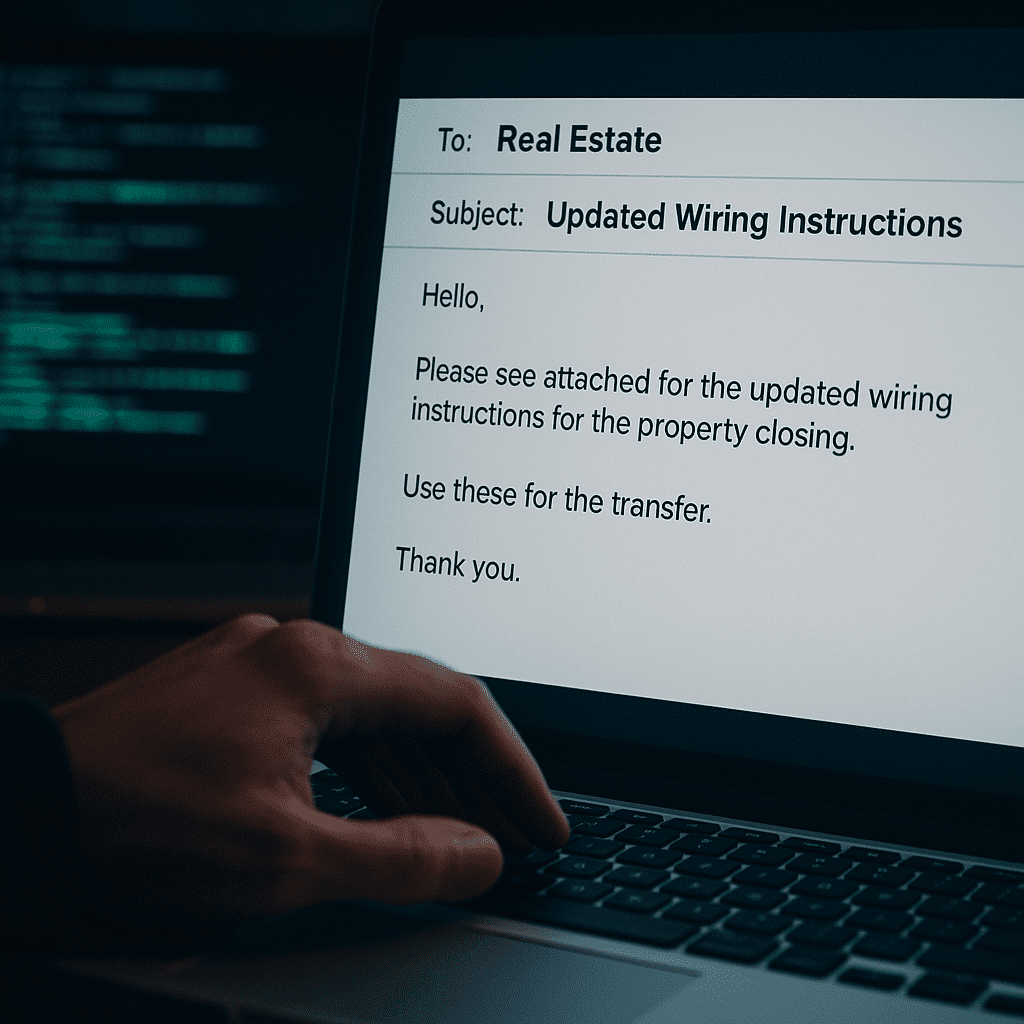
Buying or selling a home should be exciting, not terrifying. But for too many people in real estate, that excitement turns into panic the moment they realize a wire transfer went to the wrong account.
Wire fraud and phishing scams have become a serious threat to brokerages across the country. Attackers know exactly how to exploit fast-moving transactions, busy agents, and high-dollar transfers. One wrong click or a single spoofed email can expose client data, derail a closing, or drain hundreds of thousands of dollars in minutes.
The good news? These attacks are preventable. With the right cybersecurity practices in place, your brokerage can protect client information, reduce risk, and stop scammers before they strike.
In this blog, we’ll break down why real estate firms are such prime targets, and the simple, practical steps you can take to prevent wire fraud and phishing scams before they happen.
Why Real Estate Is a Top Target for Cybercriminals
Real estate deals move fast. Agents, clients, lenders, and title companies are constantly exchanging documents, wiring funds, and signing contracts. That speed and reliance on email make the industry a perfect target for cybercriminals.
Every transaction involves large sums of money and sensitive personal data. Attackers know that when emotions and deadlines are high, people are more likely to trust what looks like a legitimate message.
One carefully timed email that appears to come from a title agent or lender can trick even the most experienced professional into sending funds to a fraudulent account.
Most brokerages also operate with small teams and limited IT resources. Without a dedicated cybersecurity partner or advanced protections in place, it is easy for a single phishing email to slip through.
The danger here is that once it does, attackers can access inboxes, client information, and even entire transaction histories.
Real estate firms offer exactly what cybercriminals want: money, data, and opportunity.
How Phishing and Wire Fraud Attacks Work
Most wire fraud starts with a phishing email. These messages look legitimate at first glance. For example, they might appear to come from a title company, lender, or even someone within your own office. The goal is simple: to trick someone into sharing credentials or changing payment instructions.
Once an attacker gains access to an inbox, they study the transaction details and communication patterns. They wait for the perfect moment, then send a message that looks authentic but contains new “wiring instructions.” When funds are transferred to the fraudulent account, they’re usually gone within minutes.
Some phishing attacks don’t aim directly at money. Instead, they harvest login credentials or client data that can be sold or used to stage a more sophisticated breach later.
The tactics vary, but the outcome is the same: lost money, compromised data, and a shaken reputation.
The Cost of a Breach
When a cyberattack hits a brokerage, the damage goes far beyond the lost funds. Once client trust is broken, it is difficult to rebuild.
Wire fraud can cost hundreds of thousands of dollars in a single transaction. Even if insurance covers part of the loss, the process of investigation, recovery, and damage control can take months. In the meantime, deals stall, clients panic, and your reputation takes a hit.
The financial impact is only part of the story. A compromised email account can expose sensitive client data, trigger compliance issues, and put your entire organization under scrutiny.
Agents spend more time responding to incidents and less time closing deals.
In real estate, one compromised inbox can derail an entire closing. The cost of prevention is always lower than the cost of recovery.
How Brokerages Can Prevent Wire Fraud and Phishing Scams
You don’t need a massive IT department to protect your brokerage; you just need the right safeguards and clear processes in place. Here are simple, high-impact ways to reduce your risk:
1. Enable Multi-Factor Authentication (MFA)
Even if a hacker steals a password, MFA adds a second layer of security that stops them from logging in. It is one of the easiest and most effective defenses you can deploy.
2. Train Your Team Regularly
Phishing emails are designed to look real. Ongoing security awareness training and simulated phishing tests help agents recognize red flags before it is too late.
3. Verify Wire Transfers by Phone
Never rely on email alone for wiring instructions. Always confirm changes over the phone using a verified number that you know. Not the one in the suspicious email.
4. Secure Your Email Domain
Set up authentication tools like SPF, DKIM, and DMARC to prevent scammers from sending messages that appear to come from your company.
5. Partner with a Managed Cybersecurity Provider
A trusted IT partner can monitor your systems, stop suspicious activity, and respond instantly if something goes wrong. Continuous monitoring and fast response times make all the difference.
By taking these steps, you can protect client data, prevent fraud, and maintain the confidence that every deal will close safely.
How NTS Helps Real Estate Firms Stay Protected
At Network Thinking Solutions (NTS), we help real estate brokerages protect what matters most: Your clients, their data, and your reputation.
Our managed cybersecurity and IT services are designed for fast-paced industries like real estate, where timing and trust are everything. We provide continuous monitoring, advanced phishing protection, and real-time threat response so your team can focus on closing deals, not worrying about inbox security.
Because we are SOC 2 certified, you can trust that every safeguard we put in place meets the highest standards for data security and compliance.
Whether it is securing email systems or creating clear wire transfer verification policies, NTS gives your brokerage the tools and visibility to stay protected in a digital world that changes by the day.