
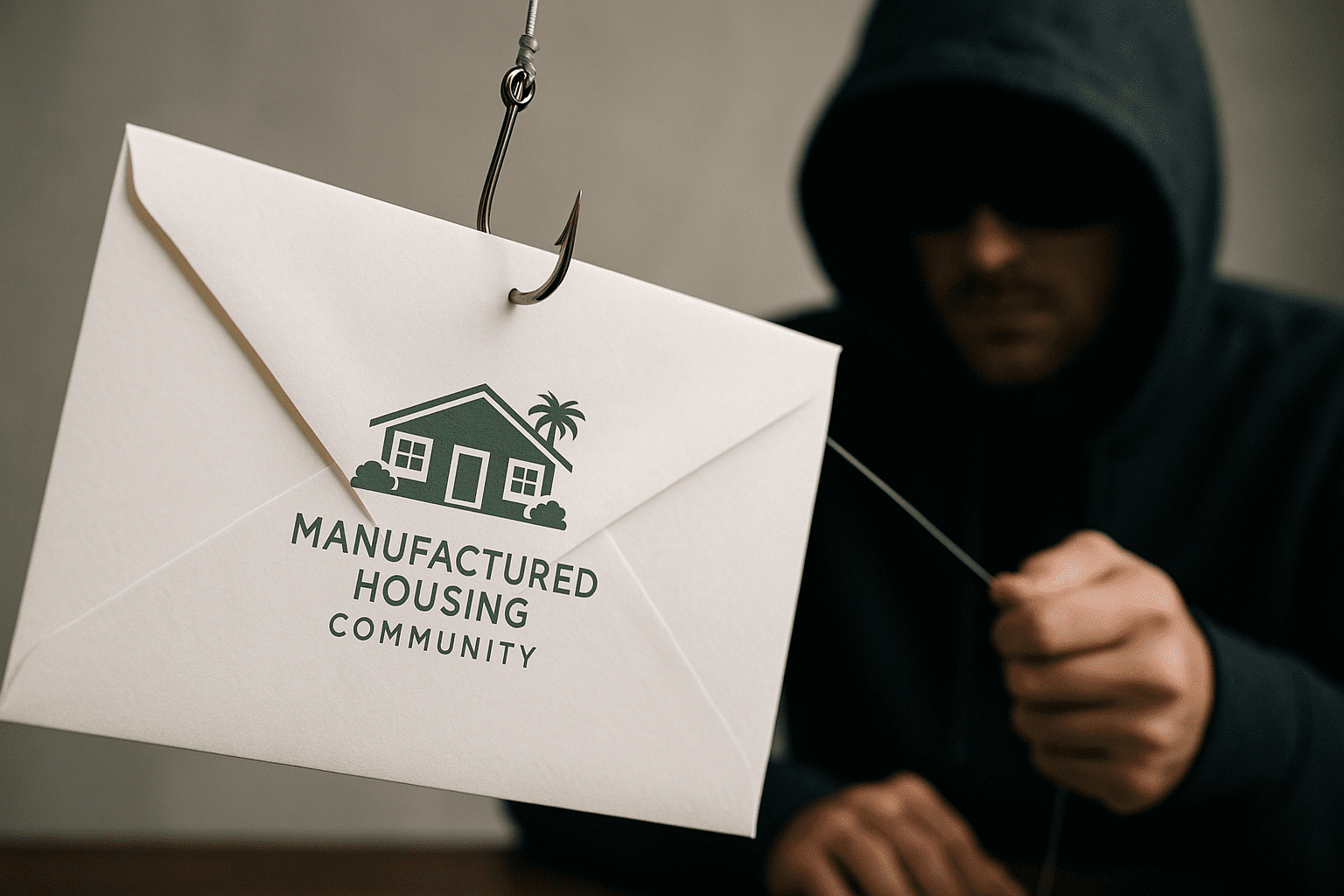
It usually starts with an email that looks completely normal.
Maybe it’s a message from “corporate” asking to verify account information. Or a vendor sending over an updated routing number. Everything looks right: the logo, the tone, even the email signature.
But one click, one transfer, or one file download later… the damage is done.
For manufactured housing operators, phishing and payment fraud have become some of the most expensive threats in the industry. Between vendor payments, resident information, and multi-site communication, there are too many moving parts, and scammers know it.
The good news? You don’t need a massive cybersecurity budget to stay safe. With the right tools, simple verification steps, and a clear understanding of how these attacks work, you can protect your communities, your data, and your bottom line.
Why manufactured housing operators are prime targets
Cybercriminals go where the opportunity is, and right now, that’s manufactured housing.
Operators handle an incredible amount of sensitive data every day: resident applications, payment details, vendor invoices, and internal communications. With multiple communities, decentralized teams, and busy regional managers, it only takes one weak link in the chain for a scam to slip through.
Phishing works because it preys on trust. Attackers don’t need to “hack in” when they can trick someone into clicking a link or wiring funds. A fake email from “corporate” or a vendor can look legitimate enough to fool even the most experienced employee, especially when you’re juggling calls, maintenance tickets, and move-ins.
And here’s what makes manufactured housing operators particularly vulnerable:
Each community runs slightly differently, so security practices aren’t always consistent.
Smaller on-site teams often share devices or logins, making it harder to track who clicked what.
Some systems are outdated or run locally, with limited protection or monitoring.
It’s not that your teams aren’t careful; it’s that they’re busy. Cybercriminals know that, and they exploit it.
The goal isn’t to scare you. It’s to make one thing clear: you don’t have to be a big company to be a big target.
The anatomy of a phishing attack (and why they’re so convincing)
Phishing emails have gotten a lot smarter and a lot harder to spot. These aren’t the old “Nigerian prince” scams anymore. Today’s attackers know how to blend in with your daily operations.
A typical phishing attack starts with something ordinary: a vendor update, a payment confirmation, or a message from a “manager” asking for a quick favor. The email looks familiar, uses the right tone, and even includes a real signature block. That’s what makes it dangerous; it doesn’t look like a threat.
Here’s how they work:
- They impersonate someone you trust. A vendor, a colleague, or even your own leadership team.
- They create urgency. “Can you handle this today?” “We need this processed before 5 PM.”
- They include a link or attachment. One click, and you’ve handed over credentials or opened a door for malware.
- They disappear. By the time you realize something’s wrong, the money’s gone or the data’s already stolen.
Phishing works because it exploits people, not systems. It’s not about firewalls or servers. It’s about attention, timing, and emotion.
That’s why awareness is your first line of defense. When your team knows what to look for and has the right tools to back them up, you turn every employee into a layer of protection instead of a vulnerability.
How to spot (and stop) phishing and fraud before it starts
You don’t need to be a cybersecurity expert to stop a phishing attack; you just need to know what to look for and have the right systems in place. Most scams fall apart once people slow down, double-check, and verify.
Here’s how your team can stay one step ahead:
Pause before you click: If an email feels urgent, that’s your first red flag. Scammers rely on
panic. Take a moment to confirm the sender’s address or pick up the phone to verify the request.
Watch for subtle changes: Fake email domains often look almost right, maybe one letter off or missing a dot. The difference can be easy to miss when you’re moving fast.
Never trust links or attachments blindly: If you weren’t expecting a document or invoice, don’t open it. Hover over links before clicking to see where they really go.
Use multi-factor authentication (MFA): Even if someone gets a password, MFA stops them from getting in. It’s one of the simplest, most effective ways to protect your team.
Run a Mail Security Check: You can’t fix what you don’t see. Our free Mail Security Check gives you an instant look at how well your email system is protecting you, and where gaps might exist.
The goal isn’t to eliminate risk entirely. It’s to make your organization resilient enough that one email can’t bring everything to a halt.
Stay Alert. Stay Protected. Stay Ahead with NTS.
In manufactured housing, your reputation is built on trust. Trust from your residents, your vendors, and your teams. One phishing email shouldn’t have the power to undo that.
At Network Thinking Solutions (NTS), we help operators stay one step ahead of cyber threats with simple, effective tools and hands-on support. From advanced email security to cloud migration and 24/7 monitoring, we make protecting your communities easier and more affordable than you might think.
If you’re ready to find out how secure your system really is, start with our free Mail Security Check. It only takes a minute, and it could save you thousands.