
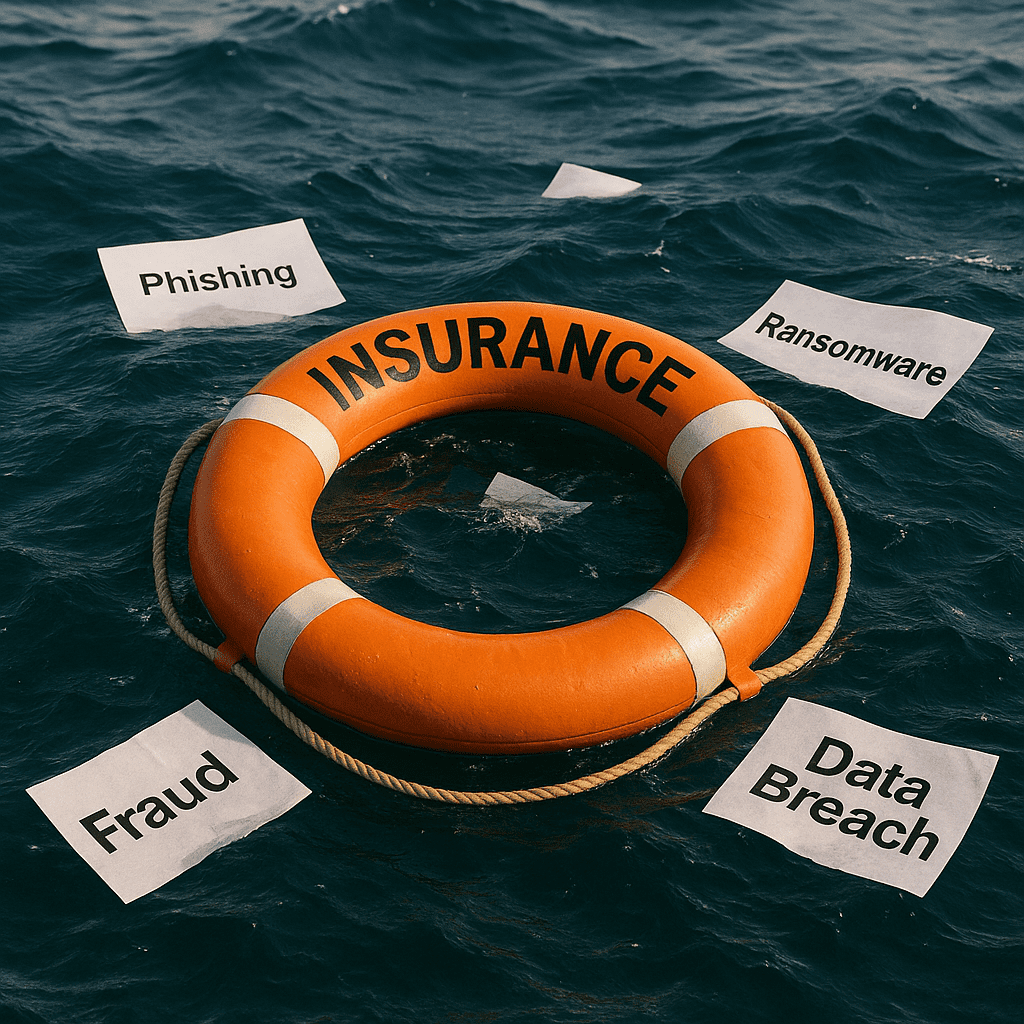
You finally did it! You got cyber insurance. Between phishing scams, ransomware, and data breaches, it felt like the smart move. A little extra peace of mind in case the worst happens.
But here’s the catch: most businesses don’t realize that having cyber insurance doesn’t mean you’re automatically fully protected.
Policies come with fine print, and if your systems don’t meet the required security standards (like multi-factor authentication or regular data backups), your claim could be denied when you need it most. Unfortunately, it happens more often than people think.
Cyber insurance is important, but it’s not a substitute for proper IT security. It’s a safety net, not a shield.
In this blog, we’ll break down what cyber insurance really covers, why insurers are tightening their requirements, and how to make sure your business is actually protected when it matters most.
What Cyber Insurance Actually Covers (and What It Doesn’t)
Cyber insurance sounds like it covers everything, until you need to use it.
The most important thing to remember is that most policies are designed to help businesses recover after an incident, not prevent one. They typically cover things like:
Breach response costs: Forensic investigations, legal assistance, and customer notifications.
Ransomware payments: Sometimes, and usually with strict limits.
Business interruption losses: Compensation for downtime or lost revenue.
That’s the good news.
The not-so-good news is that every policy comes with conditions, and missing even one can void your claim. Insurers expect certain security measures to already be in place before an attack happens.
Here’s what’s often not covered without proper IT controls:
- Incidents caused by employees using weak or shared passwords.
- Breaches linked to outdated software or unpatched systems.
- Attacks made possible by a lack of multi-factor authentication (MFA).
In other words, if your firm doesn’t meet basic cybersecurity standards, your insurance might not pay out at all.
The reality is that coverage depends on compliance, and most companies don’t find that out until they’re knee-deep in a breach.
Spoiler Alert: Insurers Are Raising the Bar
It used to be that getting cyber insurance was as simple as filling out a form and signing the policy. Not anymore.
After years of skyrocketing ransomware claims, insurers are tightening their standards—and they’re not just looking at your coverage history. They’re looking at your cybersecurity posture.
Before approving or renewing a policy, most carriers now require proof of specific security measures. If you don’t have them, you’ll either pay more for coverage—or get denied altogether.
Here’s what insurers are asking for:
Multi-Factor Authentication (MFA): Protects email, remote access, and cloud accounts from unauthorized logins.
Endpoint Detection and Response (EDR): Monitors devices for threats and suspicious behavior.
Regular Data Backups: Ensures operations can be restored quickly after an incident.
Patch Management: Keeps software and systems up to date to close known vulnerabilities.
Phishing Awareness Training: Reduces risk by helping staff recognize scams before they click.
These aren’t optional anymore, they’re expected.
Here’s the important part: most insurers won’t even process a claim if these controls aren’t already in place when the breach happens.
Cyber insurance hasn’t gone away but it has become a lot smarter. The question is whether your IT systems have kept up.
Why Insurance Without Security Is a Risk in Itself
Think of cyber insurance like car insurance. It’ll help pay for the damage after a crash, but it won’t stop the accident from happening. If you were driving without brakes or skipping maintenance, your claim might not go far.
The same goes for cybersecurity.
Insurance can help you recover after an attack, but it can’t stop one. Without the right IT controls in place, a single phishing email or ransomware infection can grind your business to a halt long before an insurance payout arrives.
Even when claims are approved, there’s still downtime, lost revenue, and reputational damage to deal with. In some cases, it can take months before businesses are fully back online. And after a major incident, your premiums can skyrocket, or your insurer may decide not to renew your coverage at all.
Cyber insurance should be your backup plan, not your only plan.
The smartest approach is to build security from the ground up so your systems are strong enough to prevent most attacks and resilient enough to recover quickly if one slips through the cracks.
The Core IT Security Controls Every Business Needs
The good news? You don’t need a massive security budget to meet insurer requirements or to protect your business. You just need the right fundamentals in place.
Here are the core IT security controls every organization should have:
Multi-Factor Authentication (MFA): Stops attackers even if they steal a password. MFA adds a second layer of protection for logins, keeping email, cloud platforms, and internal systems secure.
Regular Data Backups: If ransomware hits, you can restore quickly and get back to business. Backups should be automated, encrypted, and stored off-site or in the cloud.
Endpoint Detection and Response (EDR): Think of EDR as 24/7 digital surveillance for your devices. It monitors activity in real time, flags suspicious behavior, and isolates threats before they spread.
Patch Management: Cybercriminals rely on known vulnerabilities. Regular software and system updates close those gaps before they can be exploited.
Phishing Awareness Training: Your team is your first line of defense. A quick click can open the door to disaster. Consistent, simple training helps employees recognize red flags and avoid them.
Incident Response Plan: When something happens (and eventually, something will), everyone should know exactly what to do. A clear, tested plan keeps small issues from turning into crises.
These aren’t just best practices. A lot of these are the exact controls insurers expect to see before approving or paying out a policy. More importantly, they’re what protect your business from ever needing to file a claim in the first place.
How NTS Helps Businesses Stay Protected and Insurable
Cyber insurance carriers expect certain controls like MFA, backups, EDR, and security awareness training to already be in place. But most companies don’t have the time or resources to manage it all in-house. That’s where we come in.
At Network Thinking Solutions (NTS), we help businesses bridge the gap between compliance and protection.
We start by assessing your current environment to uncover risks that could jeopardize coverage or leave you exposed. Then we implement and maintain the security measures your insurer requires, without disrupting your day-to-day operations.
Our goal isn’t to overwhelm you with tools and alerts. It’s to make cybersecurity simple, effective, and built around how your business actually works.
With NTS, you get:
- A complete cybersecurity foundation that meets insurer expectations.
- Monitoring and rapid response if something goes wrong.
- Peace of mind knowing your systems are protected and your policy will hold up when you need it most.
Cyber insurance matters, but it’s only as strong as the systems behind it. NTS makes sure both are working together to protect your business from every angle, for peace of mind and peace of wallet. Are you ready to see how we can help you?